
Glowing Skincare Tips: A Complete Guide to Radiant and Healthy Skin

Achieving radiant and healthy skin is a dream for many, but it doesn’t require an overwhelming number of products or complicated routines. The secret lies in consistency, understanding your skin type, and following the right skincare practices. These glowing skincare tips will help you build an effective routine that enhances your natural beauty while protecting your skin from environmental damage.
From morning and night routines to seasonal care and dermatologist-recommended treatments, this comprehensive guide will provide everything you need to maintain a year-round glow.
Why a Consistent Skincare Routine Is Essential for Glowing Skin
Consistency is the cornerstone of healthy and radiant skin. A well-maintained skincare routine supports the skin’s natural regeneration process and strengthens its protective barrier.
Benefits of a Consistent Skincare Routine
- Promotes Skin Cell Renewal: Regular care helps remove dead skin cells, revealing brighter skin.
- Maintains Hydration: Proper moisturizing keeps the skin soft and plump.
- Prevents Premature Aging: Daily sunscreen and antioxidants reduce fine lines and wrinkles.
- Improves Skin Texture: Consistent use of active ingredients minimizes pores and pigmentation.
- Strengthens the Skin Barrier: Protects against pollution, UV rays, and irritation.
By following these glowing skincare tips, you can achieve long-lasting and visible improvements in your skin’s health and appearance.
Morning Skincare Tips for Naturally Glowing Skin
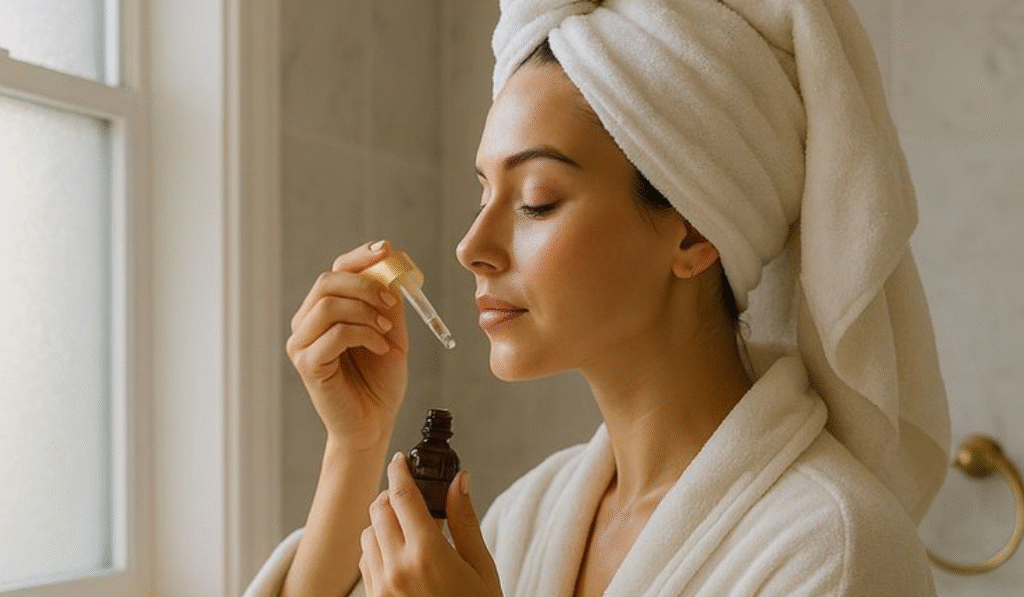
A well-structured morning skincare routine prepares your skin for the day by cleansing, hydrating, and protecting it from environmental stressors.
Step 1 – Gentle Cleansing
Cleansing removes excess oil, sweat, and impurities that accumulate overnight. Choose a cleanser suited to your skin type:
- Oily Skin: Gel or foaming cleanser.
- Dry Skin: Cream-based or hydrating cleanser.
- Sensitive Skin: Fragrance-free and mild formula.
Tip: Use lukewarm water to avoid stripping natural oils.
Step 2 – Toning for Skin Balance
Toners help restore the skin’s pH balance and enhance the absorption of subsequent products. Modern toners also provide hydration and soothing benefits.
Key Ingredients to Look For:
- Rose water for soothing
- Niacinamide for pore refinement
- Hyaluronic acid for hydration
Step 3 – Vitamin C Serum for Brightening
Vitamin C is a powerful antioxidant that brightens the complexion and protects against environmental damage.
Benefits:
- Reduces pigmentation and dark spots
- Boosts collagen production
- Enhances overall skin radiance
Apply 2–3 drops and gently pat into the skin before moisturizing.
Step 4 – Moisturizing for Hydration
Moisturizers lock in hydration and strengthen the skin barrier.
Choosing the Right Moisturizer:
- Oily Skin: Lightweight, gel-based formulas.
- Dry Skin: Cream-based with ceramides or shea butter.
- Sensitive Skin: Fragrance-free options.
Step 5 – Sunscreen for UV Protection
Sunscreen is the most crucial step in any glowing skincare routine. It protects against harmful UVA and UVB rays that cause premature aging and pigmentation.
Best Practices:
- Use a broad-spectrum sunscreen with SPF 30 or higher.
- Apply 15–20 minutes before sun exposure.
- Reapply every 2–3 hours when outdoors.
Night Skincare Tips to Repair and Rejuvenate Skin

The night skincare routine focuses on repairing and rejuvenating the skin while you sleep, when the natural healing process is most active.
Double Cleansing for Deep Purification
Double cleansing ensures the complete removal of makeup, sunscreen, and impurities.
- Oil-Based Cleanser: Dissolves makeup and excess oil.
- Water-Based Cleanser: Removes remaining dirt and sweat.
Exfoliation to Remove Dead Skin Cells
Exfoliation promotes smoother and brighter skin by removing dead skin cells.
Frequency:
- Oily Skin: 2–3 times per week
- Dry/Sensitive Skin: Once a week
Types:
- AHAs (Glycolic Acid): Ideal for dry or dull skin.
- BHAs (Salicylic Acid): Suitable for oily and acne-prone skin.
Treatment Serums (Retinol or Niacinamide)
Treatment serums address specific skin concerns.
Retinol
- Reduces fine lines and wrinkles
- Stimulates collagen production
- Improves skin texture
Niacinamide
- Controls excess oil
- Minimizes pores
- Reduces redness and pigmentation
Eye Cream for Dark Circles
The delicate under-eye area benefits from targeted care.
Look for Ingredients Like:
- Caffeine to reduce puffiness
- Hyaluronic acid for hydration
- Peptides for anti-aging
- Vitamin K to diminish dark circles
Nourishing Night Moisturizer or Sleeping Mask
A rich night moisturizer or sleeping mask locks in hydration and supports overnight repair.
Key Ingredients:
- Ceramides
- Squalane
- Shea butter
- Peptides
Using a sleeping mask once or twice a week provides an extra hydration boost.
Seasonal Skincare Tips for Maintaining a Year-Round Glow
Adapting your skincare routine to seasonal changes is essential for maintaining healthy skin.
Winter Skincare Tips for Dry Skin
- Use cream-based cleansers and heavier moisturizers.
- Incorporate hydrating ingredients like hyaluronic acid and ceramides.
- Avoid over-exfoliation.
- Apply lip balm and facial oils to prevent dryness.
Summer Skincare Tips to Control Oil
- Switch to lightweight, gel-based products.
- Use oil-free sunscreen.
- Cleanse twice daily to manage excess sebum.
- Include niacinamide to control oil production.
Monsoon Skincare Tips to Prevent Breakouts
- Maintain proper cleansing to prevent bacterial growth.
- Use non-comedogenic products.
- Exfoliate gently to avoid clogged pores.
- Keep the skin dry and hydrated.
How to Choose the Right Skincare Tips for Your Skin Type
Understanding your skin type is crucial for selecting the most effective products and routines.
Skincare for Oily Skin
- Use gel-based cleansers and moisturizers.
- Incorporate salicylic acid and niacinamide.
- Avoid heavy, oil-based products.
Skincare for Dry Skin
- Choose hydrating cleansers and rich moisturizers.
- Look for ingredients like ceramides and hyaluronic acid.
- Limit exfoliation to prevent irritation.
Skincare for Sensitive Skin
- Opt for fragrance-free and hypoallergenic products.
- Perform patch tests before using new products.
- Use soothing ingredients like aloe vera and chamomile.
Skincare for Combination Skin
- Balance oily and dry areas with lightweight hydration.
- Use targeted treatments for different zones.
- Avoid overly harsh or heavy products.
Natural Glowing Skincare Tips You Can Follow at Home
Natural remedies can complement your skincare routine and enhance your skin’s glow.
- Aloe Vera: Soothes and hydrates the skin.
- Honey and Turmeric Mask: Brightens and fights bacteria.
- Rose Water: Acts as a natural toner.
- Cucumber: Reduces puffiness and refreshes the skin.
- Adequate Hydration: Drinking enough water maintains skin elasticity.
- Healthy Diet: Include fruits, vegetables, and omega-3 fatty acids for better skin health.
Dermatologist-Recommended Treatments for Glowing Skin
Professional treatments can provide faster and more noticeable results when combined with a proper skincare routine.
- HydraFacial: Deep cleansing, exfoliation, and hydration.
- Chemical Peels: Improve texture and reduce pigmentation.
- Laser Skin Brightening: Targets uneven skin tone and dark spots.
- Photofacial (IPL): Reduces redness and pigmentation.
- Microdermabrasion: Enhances skin smoothness and radiance.
Disclaimer: Always consult a certified dermatologist before undergoing any professional treatment.
FAQs About Glowing Skincare Tips
1. How long does it take to see results from a skincare routine?
Most people notice visible improvements within 4–6 weeks of consistent use, as this aligns with the skin’s natural renewal cycle.
2. Can I achieve glowing skin naturally at home?
Yes, by maintaining a healthy lifestyle, staying hydrated, and following a consistent skincare routine, you can achieve naturally radiant skin.
3. Which ingredient is best for glowing skin?
Vitamin C, niacinamide, hyaluronic acid, and retinol are among the most effective ingredients for enhancing skin radiance.
4. Is sunscreen necessary even when staying indoors?
Yes, UVA rays can penetrate windows and contribute to premature aging and pigmentation, making daily sunscreen essential.
5. How often should I exfoliate my skin?
Exfoliation should be done 1–3 times per week, depending on your skin type and sensitivity.
Final Thoughts
Achieving radiant and healthy skin is not about using numerous products but about following consistent and effective glowing skincare tips tailored to your skin’s needs. By incorporating a protective morning routine, a reparative night routine, seasonal adjustments, and natural remedies, you can maintain a year-round glow.
Remember, patience and consistency are key. Choose products suited to your skin type, protect your skin with sunscreen, and nourish it with the right ingredients. With dedication and the right approach, naturally luminous skin is well within your reach.